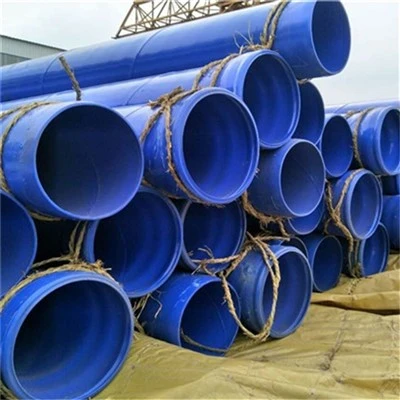
As a crucial component of modern pipeline engineering, insulated steel pipes are widely used in heating, cooling, petrochemical, and other fields. Their construction quality directly impacts the system's insulation effectiveness, durability, and safety. To ensure that insulated steel pipe construction complies with regulations, strict adherence to relevant technical standards is essential, requiring meticulous control from material selection, construction preparation, and installation processes.
I. Material Standards and Acceptance
The main materials for insulated steel pipes include steel pipe, insulation layer (such as polyurethane foam, rock wool), and outer casing (such as high-density polyethylene or galvanized iron). Before construction, all materials must comply with national standards, such as "GB/T 29047-2012 High-density polyethylene outer casing, polyurethane foam plastic prefabricated direct-buried insulated pipe" or "GB/T 17393-2008 Technical Specification for Covered Direct-Buried Insulated Pipeline."
Steel Pipe: Must comply with GB/T 8163-2018 Seamless Steel Pipe for Fluid Transportation or GB/T 3091-2015 Welded Steel Pipe for Low-Pressure Fluid Transportation, ensuring the absence of defects such as cracks and pinholes.
Insulation: The polyurethane foam should have a thermal conductivity of ≤0.024 W/(m·K), a density of ≥60 kg/m³, and a compressive strength of ≥0.3 MPa.
External Pipe: High-density polyethylene (HDPE) with a tensile strength of ≥20 MPa and an elongation at break of ≥350% to ensure impact and corrosion resistance.
Materials must be provided with a certificate of conformity and a test report upon arrival, and a visual inspection must be conducted. Any damage, deformation, or other defects must be prohibited from use.
II. Construction Preparation
Site Survey: Before construction, the pipeline route, burial depth, and soil conditions must be surveyed to ensure compliance with design requirements. Trench Excavation: The trench for direct-buried insulated steel pipes must comply with the "GB 50268-2008 Specification for Construction and Acceptance of Water Supply and Drainage Pipeline Projects." The trench bottom should be flat and free of sharp rocks. A fine sand cushion layer (thickness ≥ 100 mm) should be laid if necessary.
Pipeline Prefabrication: Insulated steel pipes should be prefabricated in the factory or on-site to ensure a tight fit between the insulation layer and the steel pipe, free of hollows or cracks.

III. Installation Process Standards
Pipeline Welding: Argon arc welding or electric arc welding should be used. Welds must undergo 100% visual inspection and non-destructive testing (such as X-ray or ultrasonic testing) to ensure compliance with the "GB/T 12467-2018 Radiography of Fusion Welded Joints of Metallic Materials" standard.
Insulation Layer Installation: The polyurethane foam insulation layer should be foamed in-situ to ensure uniform foaming, free of shrinkage and cracking. The outer casing and insulation layer should be tightly fitted to prevent water ingress. Interface Treatment: The insulation layer at pipe connections (such as flanges and welded joints) should be continuous. Joints should be sealed with specialized sealing materials (such as polyurethane adhesive or rubber-plastic insulation tape) to prevent thermal bridging.
Backfill Requirements: When backfilling direct-buried pipelines, fine sand or soft soil should be used within 500 mm above the pipe top to prevent direct contact between hard objects and the pipe. The backfill soil should be compacted layer by layer to a density of ≥ 95%.
IV. Quality Acceptance Standards
Appearance Inspection: The insulation layer should be smooth, free of damage or peeling, and the outer casing should be free of scratches or deformation.
Thermal Insulation Performance Testing: Use a thermal imaging camera or thermal conductivity tester to verify the insulation performance and ensure it meets design requirements.
Pressure Test: After installation, the pipeline must undergo a hydraulic pressure test at 1.5 times the operating pressure. A test of no leakage after 30 minutes of steady pressure is considered acceptable. Corrosion Testing: If the steel pipe is coated with an anti-corrosion coating (such as 3PE or epoxy powder), a spark leak detector must be used to ensure there are no leaks.
V. Safety and Environmental Requirements
Construction Safety: Safety belts must be worn when working at height, and welding operations must be conducted with fire prevention measures to prevent burns and fire.
Environmental Requirements: Polyurethane foam materials must be properly stored to prevent environmental contamination by volatile substances, and waste materials must be sorted and disposed of separately.
Conclusion
The construction standards for insulated steel pipes involve multiple aspects, including materials, processes, and acceptance inspections. These must be strictly adhered to national and industry regulations to ensure the long-term, stable operation of the piping system. Quality control and regular inspections should be strengthened during construction to prevent insulation failure or pipe damage due to improper construction, thereby ensuring project quality and service life.