Behind every bridge, every high-rise building, and every oil pipeline built by humans lies a seemingly ordinary yet crucial material: base steel pipe. This hollow metal cylinder, with its unique structural advantages, has become an indispensable foundational component in modern engineering. From its first large-scale application during the Industrial Revolution to the present day, the development of steel pipe technology has consistently kept pace with the progress of human civilization. It is not only a transmitter of power but also a carrier of wisdom.
The most notable feature of base steel pipe is its "hollow-strong" mechanical properties. Compared to solid steel of the same weight, steel pipe concentrates material in an annular outer region, significantly reducing its weight while maintaining excellent compressive and bending resistance. This structural efficiency enables steel pipe to achieve maximum load-bearing capacity with minimal material consumption, much like bamboo, which achieves a perfect balance of strength and toughness in nature through its hollow structure. In the construction industry, steel pipes are often used as load-bearing columns in high-rise buildings, with a unit weight bearing capacity 5-8 times that of ordinary concrete columns. In mechanical manufacturing, precision steel pipes can withstand the enormous centrifugal forces caused by high-speed rotation without deformation.
From a materials science perspective, modern basic steel pipes have developed a rich product portfolio. Carbon structural steel pipe, the most basic type, boasts excellent processability and moderate strength, making it widely used in general construction and mechanical manufacturing. Low-alloy high-strength steel pipes, by adding small amounts of alloying elements such as manganese and silicon, significantly improve strength while maintaining good weldability, making them particularly suitable for large structures such as bridges and ships. Stainless steel pipes, thanks to the dense oxide film formed by chromium, possess excellent corrosion resistance, making them a standard choice in the chemical and food industries. Composite steel pipes, which have emerged in recent years, combine different materials by laminating them, achieving a combination of properties difficult to achieve with a single material. These diverse steel pipe products are like an "alphabet" in the engineering field, allowing engineers to combine them to meet a variety of specific needs.
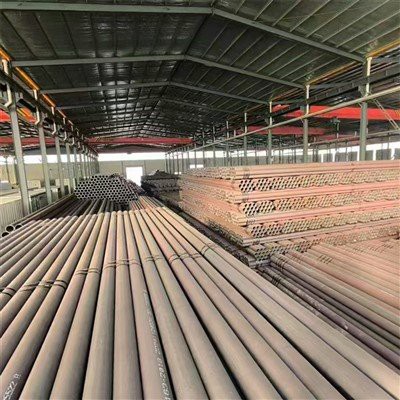
The evolution of steel pipe manufacturing technology is equally remarkable. Traditional seamless steel pipes are formed through hot working processes such as piercing and rolling. They feature no welds and strong integrity, making them suitable for harsh environments such as high pressure and high temperature. Welded steel pipes, on the other hand, are formed by coiling steel plates and then welding them together. They offer high production efficiency and low cost, and dominate the general fluid transportation market. Modern pipe manufacturing technology has introduced advanced processes such as thermal tension reducing and in-line controlled cooling, achieving unprecedented levels of dimensional accuracy and performance consistency in steel pipes. It is particularly noteworthy that with breakthroughs in 3D printing technology in the field of metal materials, complex structural steel pipes produced through additive manufacturing may become possible in the future, opening up new possibilities for engineering design.
In practical engineering applications, the value of steel pipes is often amplified through ingenious design combinations. In transmission towers, steel pipes are connected through latticework to create a lightweight yet stable structure. On offshore platforms, thick-walled steel pipe legs can withstand the impact of once-in-a-century winds and waves. In automotive exhaust systems, specially treated thin-walled steel pipes must be both resistant to high-temperature corrosion and meet lightweight requirements. These application cases fully demonstrate the flexibility of steel pipe as an "engineering language"-engineers can precisely control the mechanical behavior and functional properties of a structure by varying its diameter, wall thickness, material, and connection method. In modern prefabricated buildings, standardized steel pipe components, like "Lego bricks," are reliably connected to form a cohesive structure, significantly improving construction efficiency and quality control.
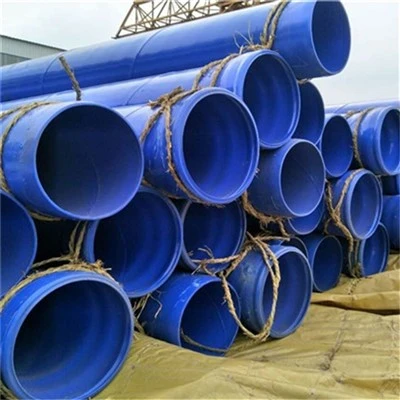
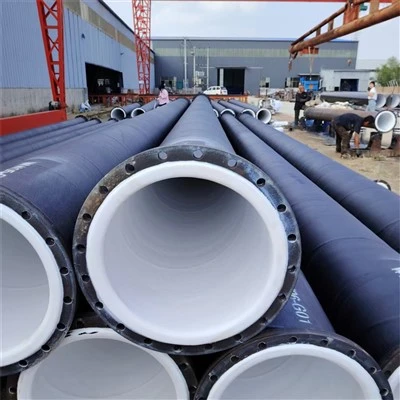
From a broader perspective, technological advancements in the steel pipe industry are closely linked to sustainable development goals. New-generation steel pipe products, through optimized alloy composition and advanced heat treatment processes, reduce precious metal content while maintaining performance. Innovations in steel pipe surface anti-corrosion technologies, such as zinc-aluminum composite coatings and ceramic linings, significantly extend their service life and reduce resource consumption. The high recycling rate of steel pipe after demolition (over 98%) makes it a truly circular economy material. These developments not only demonstrate the ingenuity of engineering technology but also highlight humanity's responsibility to nature.
Basic steel pipe may not have a glamorous appearance or often appear in the public eye, but like the "skeletal system" of modern civilization, it silently supports our material world. From the concrete-filled steel tube core of the Burj Khalifa soaring into the sky in Dubai, to the protective casing of transoceanic submarine fiber optic cables; from the containment structures of nuclear power plant reactors to the heat collecting pipes of domestic solar water heaters-steel pipes, in various forms, permeate every aspect of our lives. Understanding steel pipes is understanding the fundamental principles of modern engineering; mastering steel pipe technology holds the crucial key connecting the present and the future. In an era of endless material innovation, fundamental steel pipes maintain their irreplaceable core position, a true embodiment of engineering wisdom at its most simple level.