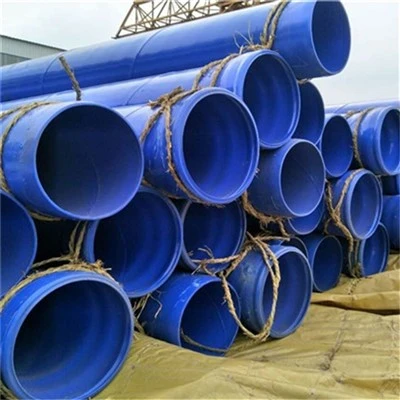
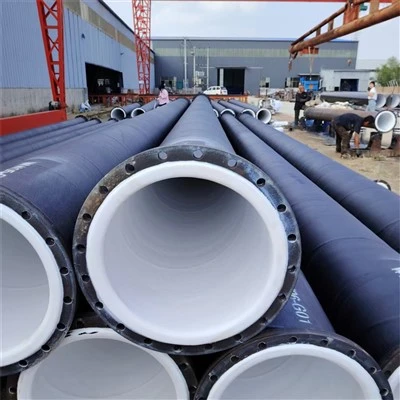
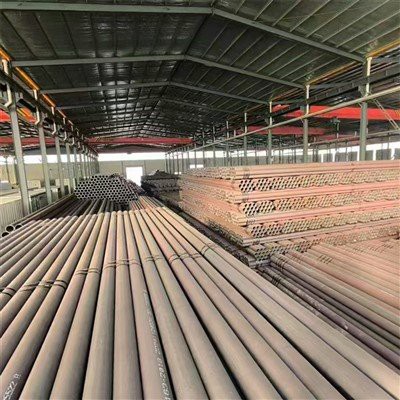
Steel pipes, as an indispensable foundational material in modern industry and construction, come in a wide variety of types and are used in a wide range of applications. Basic steel pipe classification is primarily based on material, production process, structural form, and application. Different types of steel pipes exhibit significant differences in performance, cost, and applicable scenarios. The following systematically examines the main classification methods and characteristics of basic steel pipes from multiple perspectives.
1. Classification by Material: Carbon Steel, Alloy Steel, and Stainless Steel
The most fundamental criterion for the classification of basic steel pipes is material, with carbon steel accounting for the largest proportion, followed by alloy steel and stainless steel.
Carbon Steel Pipes: Primarily composed of iron and carbon, with a carbon content typically below 2%, are categorized by carbon content into low-carbon steel (≤0.25%), medium-carbon steel (0.25%-0.6%), and high-carbon steel (>0.6%). Low-carbon steel pipes offer excellent toughness and ease of processing, making them widely used in low-pressure fluid transportation (such as water and gas pipes). Medium- and high-carbon steels offer higher strength and are suitable for mechanical structures or applications requiring post-weld heat treatment. Alloy steel pipes: Alloying elements such as chromium, nickel, and molybdenum are added to carbon steel (generally exceeding 5% in total) to enhance corrosion resistance, high-temperature strength, or wear resistance through compositional adjustments. For example, chromium-molybdenum alloy steel pipes are resistant to high temperatures and pressures and are commonly used in boilers and oil cracking equipment; nickel-based alloy steel pipes are used in corrosive chemical environments.
Stainless steel pipes: Containing 10.5% or more chromium (some also contain nickel), they form a dense oxide film that resists corrosion. Based on their metallographic structure, they are classified as austenitic (such as 304 and 316 stainless steels), ferritic (such as 430 stainless steel), and martensitic (such as 410 stainless steel). Austenitic stainless steel is non-magnetic and acid- and alkali-resistant, making it suitable for food processing and medical equipment. Ferritic stainless steel is low-cost but has poor toughness and is often used in architectural decoration. Martensitic stainless steel has a high hardness and is suitable for cutting tools and bearing components.
2. Classification by Production Process: Seamless and Welded Steel Pipes
The production process is a key factor in determining the structural integrity and performance of steel pipes. Steel pipes are primarily categorized as seamless and welded.
Seamless steel pipe: A solid steel billet is processed through a perforation process (hot rolling or cold drawing) into a hollow tube with no welds, resulting in high overall strength and strong pressure-bearing capacity. Hot-rolled seamless steel pipe offers a wide range of sizes (outer diameters up to 630mm and above) and is suitable for high-pressure fluid transportation (such as oil casing and hydraulic struts). Cold-drawn seamless steel pipe offers high precision and a smooth surface, making it commonly used in precision machinery or hydraulic systems.
Welded steel pipe: Made from steel plate or strip, it is formed through longitudinal seam welding (ERW), spiral seam welding (SSAW), or high-frequency resistance welding (HFW), and features one or more welds. Longitudinal seam welded steel pipe (such as galvanized steel pipe for low-pressure fluid transportation) offers low cost and high production efficiency, and is widely used in building water supply and drainage, as well as low-pressure gas. Spiral seam welded steel pipe has a uniform wall thickness and is suitable for large diameters (up to 3m and above), and is commonly used in oil and gas pipelines. High-frequency resistance welded steel pipe requires no filler metal and features high welding speeds, making it commonly used in automotive parts and furniture components.
3. Classification by Structural Form: Round Tubes, Square Tubes, Rectangular Tubes, and Other Special-Shaped Tubes
Based on cross-sectional shape, basic steel pipes can be divided into conventional geometric shapes and custom-made shapes.
Round Tubes: Accounting for over 80%, this is the most common type of steel pipe. The circular cross-section offers uniform stress distribution, superior compression and bending resistance, and ease of processing (such as bending and welding). It is widely used in fluid transportation (water and oil pipes), mechanical structures (scaffolding, drive shafts), and building support (curtain wall keels).
Square and Rectangular Tubes: Formed by cold bending or direct rolling, they have square or rectangular cross-sections. Square tubes offer both high compression resistance and space efficiency and are commonly used in shelving and display racks. Rectangular tubes, due to their varying lengths and widths, can be adapted to specific installation requirements (such as door and window frames and equipment housings), and are widely used in architectural decoration and lightweight steel structures.
Special-Shaped Tubes: These include special shapes such as elliptical, triangular, and hexagonal tubes, often customized to meet equipment interface or functional requirements. For example, hexagonal steel pipes are used in tool handles like wrenches to enhance grip friction; plum blossom-shaped steel pipes are used in decorative guardrails to enhance aesthetics.
4. Classification by Application: Structural Pipes, Fluid Pipes, Mechanical Pipes, and Special-Purpose Pipes
Based on the end-use scenario, basic steel pipes can be further subdivided into function-oriented categories.
Structural steel pipes: Primarily used to carry loads, they emphasize mechanical properties (such as tensile strength and yield point). For example, Q235B steel pipes for construction are used in scaffolding and bridge supports; 20# steel pipes for machinery manufacturing are used in gearbox housings and bearing seats.
Fluid transport steel pipes: Core requirements include corrosion resistance and inner wall smoothness. These pipes are categorized into water and gas pipes (such as galvanized steel pipes), oil and gas pipelines (such as API 5L standard line pipes), and chemical pipes (such as acid-resistant steel seamless pipes). Low-pressure fluid transport pipes often undergo anti-corrosion treatment (plastic coating, galvanizing), while high-pressure pipes require flaw detection to ensure they are free of defects. Machined steel pipes: As part blanks, they must meet dimensional accuracy and surface quality requirements. For example, cold-drawn precision steel pipes are used in hydraulic valve bodies and automotive shock absorbers; alloy structural steel pipes are used in aircraft engine brackets and precision machine tool guide rails.
Special-purpose steel pipes: Designed for extreme environments, such as zirconium alloy steel pipes for nuclear power plants (high-temperature neutron radiation resistance), super duplex stainless steel pipes for offshore platforms (seawater corrosion resistance), and titanium alloy thin-walled pipes for aerospace applications (lightweight and high specific strength).
Conclusion
The basic steel pipe classification system reflects the deep integration of materials science, manufacturing processes, and engineering needs. From carbon steel to stainless steel, from seamless to welded, from round to shaped pipes, each type optimizes performance for specific applications. Understanding these classifications not only helps accurately match engineering material selection to specific needs but also provides a technical foundation for the customized development of the steel pipe industry. With the advancement of new materials (such as composite-coated steel pipes) and manufacturing technologies (such as 3D-printed micro-steel pipes), the classification and application scenarios of steel pipes will continue to expand in the future.