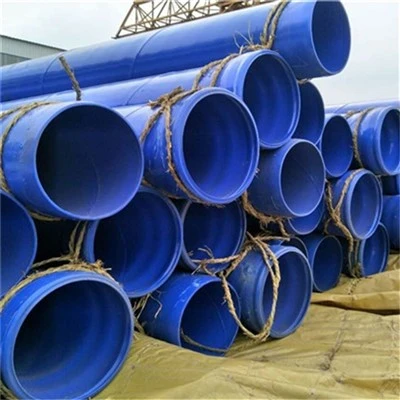
Quality inspection of insulated steel pipes is a critical step in ensuring energy efficiency, safety, and service life in industrial and building applications. Inspection work needs to systematically cover multiple core dimensions.
Appearance quality is the starting point of assessment, primarily through visual inspection or with the aid of a magnifying glass to check whether the pipe surface is uniform and smooth, ensuring there are no cracks, dents, or impurities. These surface defects can become stress concentration points, leading to crack propagation during pipe use; therefore, it is the first line of defense in quality control.
Dimensional accuracy directly affects the installation quality and sealing performance of the piping system. Key parameters include diameter tolerance, wall thickness uniformity, and length accuracy, requiring multi-point measurements using calipers or thickness gauges to ensure data accuracy. Dimensional deviations exceeding allowable ranges will lead to installation difficulties or seal failure.
Insulation performance is the core value of insulated steel pipes, mainly measured by thermal conductivity; a lower value indicates better insulation. Testing methods include the hot plate method for precise laboratory measurements and the heat flux method for rapid on-site assessment. In practical applications, good thermal insulation performance can significantly reduce heat loss, for example, effectively improving overall energy efficiency in heating systems.
Mechanical performance testing aims to ensure the pipeline maintains structural integrity under various external forces. Key test items include compressive strength, tensile strength, and modulus of elasticity. These are typically verified using an electronic universal testing machine to simulate actual stress conditions, ensuring the pipeline's reliability under extreme conditions.
Since insulated steel pipes are often exposed to complex chemical environments, corrosion resistance is crucial for their long-term use. This requires assessing chemical media resistance (such as resistance to acids, alkalis, and salts), conducting electrochemical corrosion tests, and performing laboratory environmental simulation tests. Good corrosion resistance can significantly extend pipeline life and reduce maintenance costs.
Finally, the planning and safe execution of inspection work are equally important. The determination of the inspection cycle must comprehensively consider the pipeline's operating environment, the properties of the fluid being transported (e.g., corrosive fluids require increased inspection frequency), and specific engineering requirements. Regarding safety, warnings must be set up in hazardous areas such as high-temperature and high-pressure areas. Inspection personnel must wear protective clothing, goggles, and other equipment, and strictly adhere to equipment operating procedures to prevent accidents.
In conclusion, a systematic quality inspection can comprehensively assess the quality of insulated steel pipes. It is recommended to establish a regular inspection system, combining precise laboratory testing with rapid on-site evaluation to form a closed-loop quality management system. For critical projects, engaging a third-party testing agency for independent verification is an effective way to ensure the objectivity and impartiality of test results.