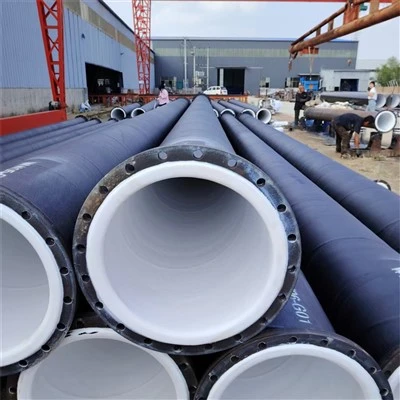
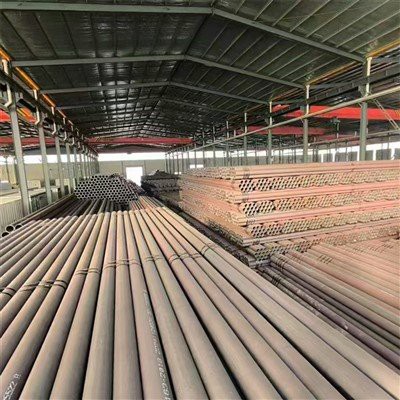
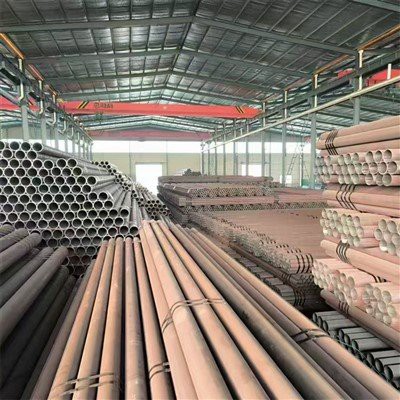
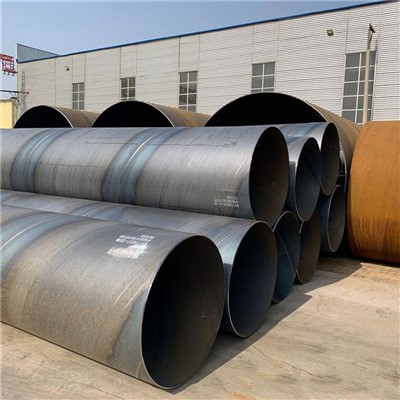
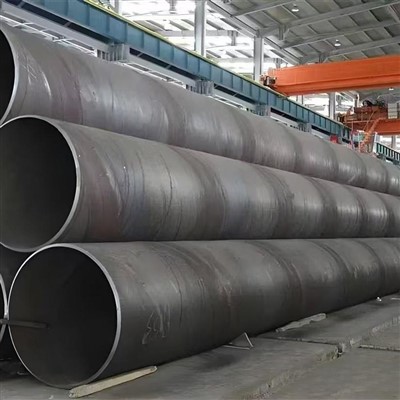
Insulated steel pipes are composite pipe systems that combine pipeline transportation capabilities with efficient insulation technology. They are widely used in the petroleum, chemical, district heating, refrigeration, and industrial insulation industries. Their core value lies in their unique structural design, which minimizes heat loss while meeting engineering requirements such as corrosion resistance and pressure resistance.
I. Basic Structural Components of Insulated Steel Pipes
Insulated steel pipes are not constructed from a single material but rather consist of a three-layer core structure: a working steel pipe, an insulation layer, and a protective outer shell. Some designs also incorporate auxiliary functional layers such as leak alarm lines.
1. Working Steel Pipe (Inner Pipe)
Working steel pipes are the direct carrier of the transported medium (such as hot water, steam, or oil). They are typically made of seamless steel pipe, spiral welded pipe, or straight seam welded pipe. The material is selected based on the characteristics of the medium, such as carbon steel, stainless steel, or alloy steel. The inner wall must meet corrosion and high-pressure resistance requirements, while the outer wall must be tightly bonded to the insulation layer.
2. Insulation Layer (Intermediate Insulation Layer)
The insulation layer is the core technical layer of the insulated steel pipe, its primary function being to block heat transfer. Common insulation materials include:
Polyurethane foam (PUF): Low thermal conductivity (approximately 0.024 W/m·K), high closed-cell content, and high compressive strength. It is currently the most mainstream insulation material and is foamed on-site or prefabricated in factories.
Rock wool/glass wool: Suitable for high-temperature environments (e.g., above 500°C), but has a high density and strong hygroscopicity.
Aerogel composite layer: A new ultra-light nanomaterial with extremely low thermal conductivity (<0.018 W/m·K), but it is more expensive and is primarily used in specialized, high-end projects.
The thickness of the insulation layer is calculated based on the medium temperature, ambient temperature difference, and economic considerations, typically ranging from 30 to 150 mm.
3. Protective Shell (Outer Sheath)
The protective shell protects the insulation layer from mechanical damage, UV radiation, and soil corrosion. Common materials include:
High-density polyethylene (HDPE): Corrosion-resistant and waterproof, suitable for underground installation, formed by heat-melt welding.
Galvanized steel/aluminum: Used for overhead pipelines or high-temperature environments, it offers high mechanical strength and can be combined with an anti-corrosion coating to extend its service life.
Fiberglass reinforced plastic (FRP): Combines corrosion resistance with lightweight properties, making it suitable for highly corrosive environments such as the chemical industry.

II. Auxiliary Structures and Functional Extensions
Some high-end insulated steel pipe systems may further integrate the following structures:
Leakage alarm wire: Embedded in the insulation layer, it quickly locates the fault point through electrical signal changes when a leak occurs in the working steel pipe, enhancing safety.
Sliding bracket/support ring: Used for long-distance direct-buried pipelines to reduce structural damage caused by thermal expansion stress.
Vacuum insulation (a rare and specialized design): This further reduces heat conduction through vacuuming, but the technical cost is extremely high.
III. Structural Advantages of Insulated Steel Pipes
High-Efficiency Insulation: The multi-layer structure works synergistically, resulting in a thermal conductivity far lower than that of ordinary steel pipes, reducing heat loss to 1/5 to 1/10 of that of traditional pipes.
Long Life: The outer sheath is corrosion-resistant and resistant to geological subsidence, with a design lifespan of 30 to 50 years.
Easy Construction: Prefabricated direct-buried insulated pipes enable standardized factory production, requiring only on-site interface preparation, significantly shortening construction time.
Environmental Protection and Energy Saving: Reduces energy waste, meeting the green industrial requirements under the "dual carbon" goals.
Conclusion
The structural design of insulated steel pipes embodies a deep integration of materials science, thermodynamics, and engineering applications. From the inner working steel pipe to the outer protective casing, each layer is optimized for its specific function, ultimately achieving the multiple goals of "efficient transportation + long-term insulation + reliable protection." With the development of new insulation materials (such as aerogels and nano-insulation coatings), the structure of insulated steel pipes will continue to become even lighter and more intelligent, expanding their potential for application in emerging sectors such as new energy and deep-sea pipelines.