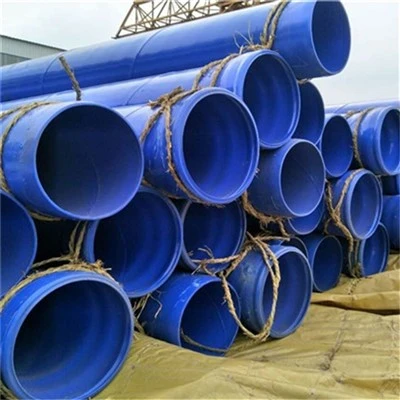
As a key material in modern pipeline engineering, anti-corrosion steel pipes are widely used in the oil, gas, chemical, and water supply industries due to their excellent corrosion resistance and long service life. Their technical characteristics are primarily reflected in three aspects: anti-corrosion coating design, material selection, and process innovation.
First, the anti-corrosion coating of anti-corrosion steel pipes is the core technology. Common anti-corrosion methods include three-layer polyethylene (3PE), epoxy coal tar, and polyurethane coatings. The 3PE anti-corrosion coating combines the strong adhesion of epoxy powder, the transition effect of the adhesive, and the impact resistance of polyethylene to form a multi-layer protective structure that effectively resists soil, moisture, and chemical media. Epoxy powder coatings, through high-temperature sintering, form a dense protective film suitable for high-temperature and high-pressure environments. Furthermore, the recent application of nano-modified anti-corrosion coatings has further improved the coating's permeability resistance and weather resistance.

Second, the choice of base material for anti-corrosion steel pipes directly affects their overall performance. Seamless and welded steel pipes are the main types of pipes. Seamless steel pipes, due to their lack of welds and high strength, are often used for high-pressure transmission. Welded steel pipes, using high-frequency welding or submerged arc welding processes to reduce costs, are suitable for general operating conditions. To enhance corrosion protection, some steel pipes are galvanized or stainless steel, but this is more expensive and is mostly used in specialized environments.
Finally, innovation in anti-corrosion processes is key to technological upgrading. Physical anti-corrosion methods such as arc spraying and hot-dip galvanizing are combined with chemical coatings to form a composite protection system. Furthermore, the application of cathodic protection technology, using impressed current or sacrificial anodes, further extends the life of steel pipes. The introduction of automated spraying and intelligent detection technologies ensures the uniformity and consistent quality of the anti-corrosion coating.
In summary, through multi-layered anti-corrosion design, high-quality base materials, and advanced processes, anti-corrosion steel pipes achieve corrosion resistance, long service life, and low maintenance costs, making them an indispensable technical solution for modern pipeline projects.