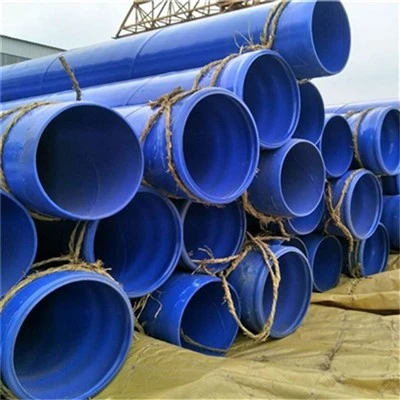
In modern construction, bridge engineering, and industrial facilities, steel tubular structures, with their unique mechanical properties and efficient material utilization, have become an indispensable foundational support system. Although often hidden beneath building facades or covered by decorative materials, they play a core role in transmitting loads and maintaining stability. From the steel frames of skyscrapers to the supporting columns of cross-sea bridges, steel tubular structures, with their high strength, corrosion resistance, and ease of construction, have formed a solid foundation for contemporary engineering.
Mechanical Advantages of Steel Tubular Structures
The core competitiveness of steel tubular structures lies in their excellent mechanical properties. Compared to traditional solid steel columns or concrete structures, steel tubular structures concentrate material at the periphery, creating an efficient "tubular cross-section." This design not only significantly reduces deadweight but also provides greater stability under axial compression and bending loads. For example, under compression, the circular cross-section of a steel tube effectively prevents local buckling, while rectangular or square tubes can further enhance load-bearing capacity through the use of appropriate stiffener design.
Furthermore, the torsional stiffness of steel pipes far exceeds that of open-section steel structures of similar cross-sections, enabling them to maintain structural integrity under dynamic forces such as earthquakes and wind loads. This characteristic has led to their widespread application in the core tubes of high-rise buildings, truss systems for large-span venues, and support columns for offshore platforms.
The Evolution of Materials and Manufacturing Technologies
The popularity of modern steel pipe structures is inseparable from advances in steel smelting and processing technologies. The use of high-strength low-alloy steels (such as Q345 and Q460) has reduced thickness requirements while maintaining strength. The mature processes of hot-rolled seamless steel pipes and high-frequency welded steel pipes provide flexible options for different applications. The former is suitable for high-pressure fluid transportation or high-precision structural components, while the latter dominates the market with its low cost and rapid production.
In recent years, breakthroughs in anti-corrosion technology have further expanded the application boundaries of steel pipe structures. The use of hot-dip galvanizing, epoxy coating, and stainless steel materials has enabled steel pipes to withstand long-term service in coastal high-salt spray environments, chemical corrosion zones, and even the harsh cold of the polar regions. For example, the steel pipe piles of the Hong Kong-Zhuhai-Macao Bridge utilize a multi-layered anti-corrosion system, ensuring a century-long lifespan despite seawater erosion.
Innovative Practices in Engineering Applications
The value of steel pipe structures lies not only in the performance of individual components but also in their synergy with other materials. In hybrid structural systems, steel pipes are often combined with concrete to form "concrete-filled steel tube" composite components: the high-strength concrete poured inside fills the radial deformation gaps in the steel pipes under compression, while the steel pipes constrain the lateral expansion of the concrete. This combination can increase the bearing capacity by over 30%. The giant columns of the Shanghai Tower utilize this technology, achieving stable support at a height of 632 meters.
In areas with strong demand for lightweighting, such as stadiums and convention centers, spatial steel pipe truss structures are connected through welded or bolted nodes to form a self-balancing geometric system. The "Ice Ribbon" speed skating rink at the Beijing Winter Olympics utilizes a saddle-shaped roof composed of cross-arranged steel pipe trusses. This not only meets the requirement for a long-span, column-free space, but also presents a technological aesthetic through the exposed silver steel pipes.
Future Challenges and Development Directions
Although steel tubular structures are quite mature, engineers are still exploring more optimized solutions. 3D-printed steel tubular node technology is achieving breakthroughs in the laboratory, enabling precise molding of complex topological structures through additive manufacturing. The integration of intelligent monitoring systems allows sensors to provide real-time feedback on internal stress and corrosion conditions in steel tubulars, significantly improving operational and maintenance safety.
From New York's Empire State Building to Dubai's Burj Khalifa, steel tubular structures have always been the invisible pillar supporting humanity's architectural ambitions. With advances in materials science and digital technology, this fundamental field will continue to push boundaries, providing lighter and smarter support solutions for future cities.