


As a supplier of large diameter spiral welded steel pipes, I often encounter inquiries about the types of anti - corrosion coatings used on these pipes. Anti - corrosion coatings play a crucial role in protecting the pipes from the harsh environments they are exposed to, extending their service life and ensuring their performance. In this blog, I will introduce several common types of anti - corrosion coatings used on large diameter spiral welded steel pipes.
1. Epoxy Coal Tar Pitch Coating
Epoxy coal tar pitch coating is a traditional and widely used anti - corrosion coating. It is a two - component coating composed of epoxy resin and coal tar pitch. This coating has excellent chemical resistance, especially resistance to acids, alkalis, and salts. It can effectively protect the steel pipe from the corrosion of various chemical substances in the soil, water, and atmosphere.
The application process of epoxy coal tar pitch coating usually involves surface treatment of the steel pipe first. The pipe surface needs to be sand - blasted or shot - blasted to remove rust, scale, and other impurities, achieving a certain roughness to ensure good adhesion of the coating. Then, the two components of the coating are mixed in a certain proportion and applied to the pipe surface by brushing, spraying, or dipping.
One of the advantages of epoxy coal tar pitch coating is its low cost. It is a cost - effective anti - corrosion solution, especially suitable for large - scale projects with a limited budget. However, it also has some limitations. The curing time of this coating is relatively long, and it may be affected by environmental temperature and humidity. In addition, coal tar pitch contains some polycyclic aromatic hydrocarbons, which may have certain environmental impacts.
2. Polyethylene (PE) Coating
Polyethylene coating is a popular choice for anti - corrosion protection of large diameter spiral welded steel pipes. It has excellent mechanical properties, such as high impact resistance and abrasion resistance. PE coating can form a continuous and dense protective layer on the pipe surface, effectively preventing the penetration of oxygen, water, and other corrosive substances.
There are two main types of PE coating: single - layer PE coating and three - layer PE coating. Single - layer PE coating is relatively simple and cost - effective. It is directly extruded onto the pre - heated pipe surface, and the coating thickness is usually in the range of 0.5 - 3mm. Three - layer PE coating consists of an epoxy primer, an adhesive layer, and a polyethylene topcoat. This composite coating structure combines the excellent adhesion of the epoxy primer, the good bonding performance of the adhesive layer, and the high - performance anti - corrosion properties of the polyethylene topcoat, providing better anti - corrosion protection.
The application process of PE coating requires strict control of the pipe surface temperature and coating extrusion parameters. The pipe surface needs to be cleaned and pre - heated to ensure good adhesion between the coating and the pipe. PE coating has a long service life and is suitable for various harsh environments, such as buried pipelines in corrosive soil and offshore pipelines.
3. Fused Bonded Epoxy (FBE) Coating
Fused Bonded Epoxy coating is a high - performance anti - corrosion coating. It is a powder coating that is electrostatically sprayed onto the pre - heated pipe surface and then fused and cured at a certain temperature to form a hard and continuous coating.
FBE coating has excellent adhesion, chemical resistance, and cathodic disbonding resistance. It can provide long - term protection for steel pipes in different environments, including soil, water, and chemical media. The coating thickness of FBE is usually in the range of 300 - 1000μm, depending on the specific application requirements.
The surface treatment of the pipe before applying FBE coating is very important. The pipe surface should be thoroughly cleaned and have a proper roughness to ensure good adhesion of the powder coating. The application process of FBE coating is relatively clean and environmentally friendly, as it does not use solvents. However, the cost of FBE coating is relatively high, and the application equipment is more complex.
4. Zinc - Rich Primer Coating
Zinc - rich primer coating is often used as a primer for anti - corrosion systems. It contains a high percentage of zinc powder, which can provide sacrificial anode protection for the steel substrate. When the coating is damaged, the zinc powder in the primer will corrode preferentially, protecting the steel pipe from corrosion.
Zinc - rich primer coating can be applied by spraying or brushing. It has good adhesion and can be used in combination with other topcoats, such as epoxy paint or polyurethane paint, to form a complete anti - corrosion system. This type of coating is suitable for environments with relatively low corrosion rates, such as indoor or semi - outdoor applications.
Application Cases and Considerations
In actual projects, the selection of anti - corrosion coating for large diameter spiral welded steel pipes depends on various factors, such as the service environment, project budget, and design requirements. For example, in a water supply and drainage project, Coated Spiral Steel Pipes for Water Supply and Drainage with appropriate anti - corrosion coatings are required to ensure the safety and hygiene of the water. If the pipes are used in a chemical plant, a coating with high chemical resistance, such as epoxy coal tar pitch coating or FBE coating, may be more suitable.
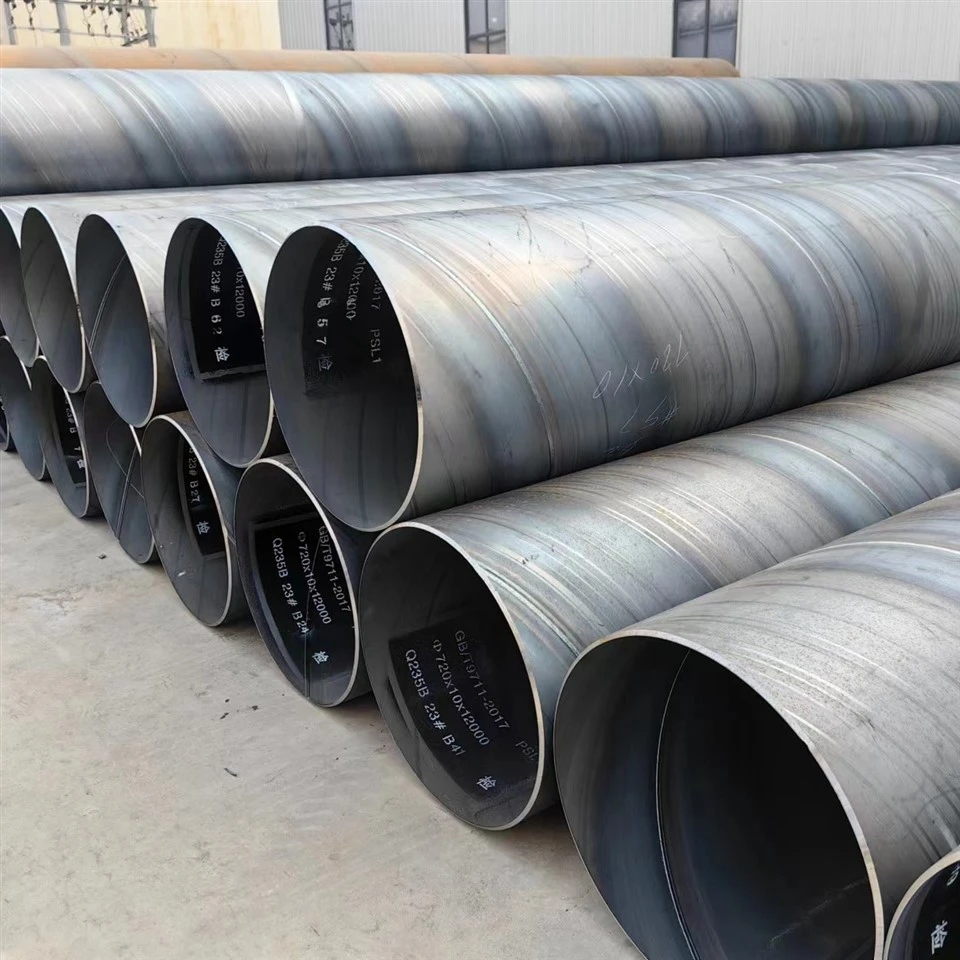
For some general construction projects, Q235B National Standard Spiral Steel Pipe with cost - effective anti - corrosion coatings like single - layer PE coating or zinc - rich primer coating can meet the requirements. And for high - end projects with strict quality requirements, such as offshore oil and gas pipelines, three - layer PE coating or FBE coating may be the preferred choice.
When using Double - sided Submerged Arc Welding Spiral Steel Pipe, the anti - corrosion coating should be carefully selected and applied to ensure the overall performance of the pipeline system. The welding area of the pipe also needs special attention during the coating process to avoid coating defects.

Conclusion
In conclusion, choosing the right type of anti - corrosion coating for large diameter spiral welded steel pipes is essential to ensure the long - term performance and service life of the pipes. Each type of coating has its own advantages and disadvantages, and the final selection should be based on a comprehensive consideration of various factors.
As a professional supplier of large diameter spiral welded steel pipes, we have rich experience in anti - corrosion coating application and can provide customers with high - quality products and professional technical support. If you are interested in our products or have any questions about anti - corrosion coatings, please feel free to contact us for procurement negotiation. We are looking forward to working with you to achieve a successful project.
References
- ASTM International. Standard Practice for Applying Fusion - Bonded Epoxy Coatings to Steel Pipe and Fittings. ASTM D3032.
- ISO 21809 - 1:2019, Petroleum and natural gas industries -- External coatings for buried or submerged pipelines used in pipeline transportation systems -- Part 1: Polyethylene coatings (3 - layer PE).
- BS EN 10288 - 4:2008, Wrought steel tubes for general purposes -- Technical delivery conditions -- Part 4: Tubes with specified elevated temperature properties.


