


As a leading supplier of Plastic Coated Steel Pipe for Mining, I often encounter various technical inquiries from our clients. One question that frequently comes up is about the Poisson's ratio of these pipes. In this blog, I'll delve into the concept of Poisson's ratio, its significance for plastic coated steel pipes used in mining, and how it impacts the performance of these pipes in mining applications.
Understanding Poisson's Ratio
Poisson's ratio is a fundamental material property that describes the relationship between the lateral strain and the longitudinal strain of a material when it is subjected to an axial load. When a material is stretched or compressed along one axis, it will also deform in the perpendicular directions. Poisson's ratio, denoted by the Greek letter ν (nu), is defined as the negative ratio of the transverse strain (ε_transverse) to the longitudinal strain (ε_longitudinal):
[
\nu = -\frac{\varepsilon_{transverse}}{\varepsilon_{longitudinal}}
]
For most materials, Poisson's ratio ranges between 0 and 0.5. A value of 0 indicates that the material does not deform laterally when subjected to an axial load, while a value of 0.5 implies that the volume of the material remains constant during deformation.
Poisson's Ratio of Plastic Coated Steel Pipes
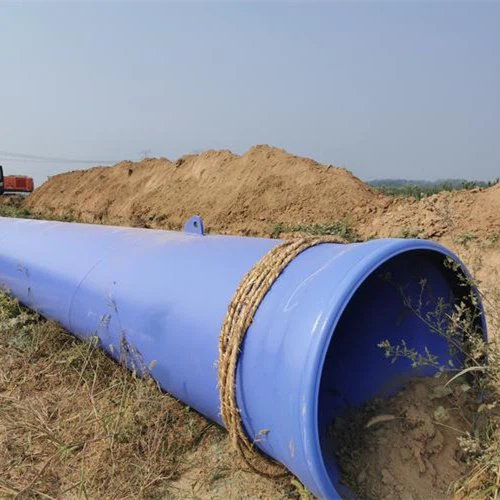
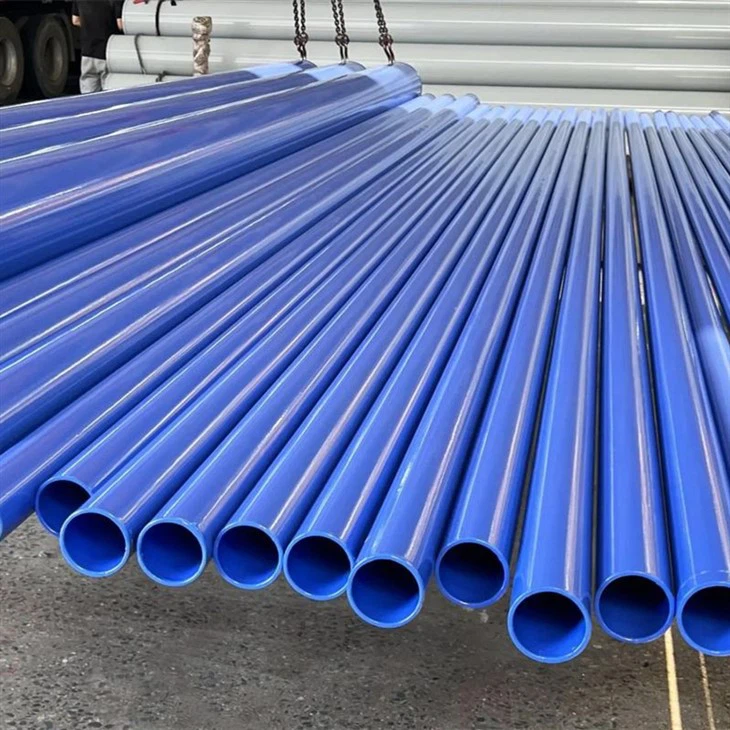
Plastic coated steel pipes for mining are composite materials consisting of a steel core and a plastic coating. The Poisson's ratio of these pipes is influenced by the properties of both the steel and the plastic coating, as well as the interaction between them.
The steel core typically has a Poisson's ratio in the range of 0.25 to 0.3. This value is relatively stable and is determined by the crystal structure and atomic bonding of the steel. The plastic coating, on the other hand, can have a wide range of Poisson's ratios depending on the type of plastic used. For example, polyethylene (PE), a commonly used plastic for coating steel pipes, has a Poisson's ratio of around 0.45 to 0.49.
The overall Poisson's ratio of a plastic coated steel pipe is a complex function of the thickness and properties of the steel core and the plastic coating, as well as the bonding strength between them. In general, the presence of the plastic coating can increase the overall Poisson's ratio of the pipe compared to a bare steel pipe. This is because the plastic coating is more compliant than the steel core and can deform more easily in the transverse direction.
Significance of Poisson's Ratio in Mining Applications
The Poisson's ratio of plastic coated steel pipes plays an important role in their performance in mining applications. Here are some key aspects where Poisson's ratio has a significant impact:
1. Pipe Deformation under Load
When a plastic coated steel pipe is subjected to an axial load, such as the weight of the overlying rock or the pressure of the fluid flowing through it, it will deform both longitudinally and laterally. The Poisson's ratio determines the extent of the lateral deformation. A higher Poisson's ratio means that the pipe will expand more in the transverse direction, which can affect the fit and stability of the pipe in the mining environment.
2. Resistance to External Pressure
In mining, pipes are often exposed to high external pressures, such as the pressure of the surrounding rock or the hydrostatic pressure of groundwater. The Poisson's ratio affects the pipe's ability to resist these external pressures. A pipe with a higher Poisson's ratio can better distribute the external pressure over its cross-section, reducing the risk of local deformation and failure.
3. Fatigue Resistance
Mining operations involve cyclic loading of pipes, such as the repeated start and stop of pumps or the vibration caused by mining equipment. The Poisson's ratio can influence the fatigue resistance of plastic coated steel pipes. A pipe with a suitable Poisson's ratio can better withstand the cyclic loading and reduce the risk of fatigue cracking.
Factors Affecting Poisson's Ratio
Several factors can affect the Poisson's ratio of plastic coated steel pipes. Here are some of the key factors:
1. Type of Plastic Coating
Different types of plastics have different Poisson's ratios. For example, polyvinyl chloride (PVC) has a Poisson's ratio of around 0.38 to 0.45, while polyurethane (PU) has a Poisson's ratio of around 0.4 to 0.45. The choice of plastic coating can therefore have a significant impact on the overall Poisson's ratio of the pipe.
2. Coating Thickness
The thickness of the plastic coating can also affect the Poisson's ratio of the pipe. A thicker coating will generally result in a higher overall Poisson's ratio, as the plastic coating will have a greater influence on the pipe's deformation behavior.
3. Bonding Strength
The bonding strength between the steel core and the plastic coating is crucial for the performance of the pipe. A strong bond ensures that the steel core and the plastic coating deform together as a single unit, which can affect the overall Poisson's ratio of the pipe.
Measuring Poisson's Ratio
Measuring the Poisson's ratio of plastic coated steel pipes can be challenging due to the composite nature of the material. One common method is to use a strain gauge to measure the longitudinal and transverse strains of the pipe under an axial load. The Poisson's ratio can then be calculated using the formula mentioned earlier.
Another method is to use non-destructive testing techniques, such as ultrasonic testing or X-ray diffraction, to measure the internal structure and deformation of the pipe. These techniques can provide valuable information about the Poisson's ratio of the pipe without damaging it.
Conclusion
In conclusion, the Poisson's ratio of plastic coated steel pipes for mining is an important material property that affects their performance in mining applications. It is influenced by the properties of the steel core, the plastic coating, and the interaction between them. Understanding the Poisson's ratio of these pipes can help us design and select the most suitable pipes for specific mining conditions, ensuring their reliability and durability.
As a supplier of Plastic Coated Steel Pipe for Mining, we are committed to providing high-quality pipes with optimal Poisson's ratio and other mechanical properties. Our pipes are designed to meet the demanding requirements of the mining industry and are backed by our extensive technical expertise and experience.
If you are interested in learning more about our Plastic Coated Steel Pipe for Mining or have any questions about Poisson's ratio or other technical aspects, please feel free to [initiate a contact for procurement discussion]. We look forward to working with you to find the best solutions for your mining needs.
References
- Callister, W. D., & Rethwisch, D. G. (2011). Materials Science and Engineering: An Introduction. Wiley.
- ASTM International. (2019). Standard Test Methods for Poisson's Ratio of Solid Plastics. ASTM D256.


