


As a supplier of Cement Mortar Anti - corrosion Steel Pipe, I've witnessed firsthand the growing demand for reliable and durable piping solutions in various industries. One critical aspect that often comes under scrutiny is the impact resistance of these pipes. In this blog, I'll delve into what impact resistance means for Cement Mortar Anti - corrosion Steel Pipe, its significance, and how it compares to other anti - corrosion steel pipes.
Understanding Impact Resistance
Impact resistance refers to a material's ability to withstand sudden forces or impacts without significant damage. For Cement Mortar Anti - corrosion Steel Pipe, this property is crucial as these pipes are often used in environments where they may be subjected to physical stress. Whether it's during installation, where they might be dropped or bumped, or in service, where they could be hit by debris or other objects, a high level of impact resistance ensures the integrity of the pipe.

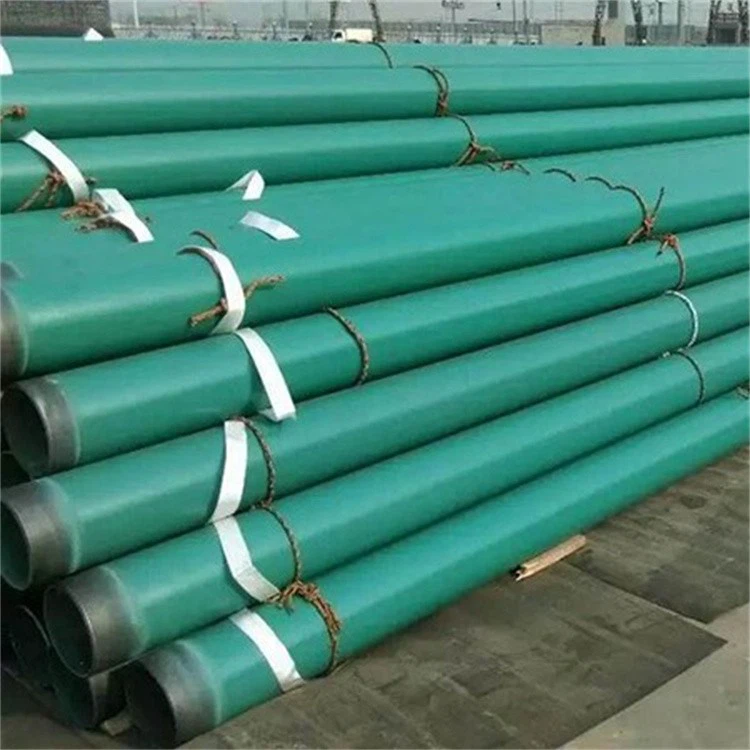
The cement mortar lining on the inner surface of the steel pipe plays a vital role in enhancing its impact resistance. The mortar acts as a cushion, absorbing and distributing the energy from an impact over a larger area. This reduces the likelihood of the steel pipe itself cracking or deforming under stress. Additionally, the bond between the cement mortar and the steel substrate is designed to be strong, preventing the lining from separating during an impact.
Factors Affecting Impact Resistance
Several factors can influence the impact resistance of Cement Mortar Anti - corrosion Steel Pipe. One of the most significant is the quality of the cement mortar used. The composition of the mortar, including the type of cement, aggregates, and additives, can affect its strength and flexibility. High - quality cement with suitable aggregates can produce a mortar lining that is more resistant to cracking and spalling under impact.
The thickness of the cement mortar lining also matters. A thicker lining generally provides better impact protection, as it has more material to absorb the energy from an impact. However, there is a balance to be struck, as an overly thick lining can add unnecessary weight to the pipe and may also increase the risk of cracking during curing.
The manufacturing process is another crucial factor. Proper mixing of the cement mortar, application techniques, and curing conditions all contribute to the final impact resistance of the pipe. For example, if the mortar is not mixed thoroughly, it may have weak spots that are more prone to damage during an impact. Similarly, improper curing can lead to shrinkage cracks in the lining, reducing its effectiveness as an impact - absorbing layer.
Significance in Different Applications
In the water supply industry, Cement Mortar Anti - corrosion Steel Pipe is widely used for transporting potable water. The impact resistance of these pipes is essential to ensure the long - term reliability of the water distribution system. During installation, the pipes may be exposed to rough handling, and in service, they could be affected by ground movement or accidental impacts. A pipe with good impact resistance is less likely to develop leaks, which can lead to water loss and contamination.
In the sewage and wastewater treatment sector, the pipes are often buried underground. They may be subjected to external forces from soil movement, construction activities, or even vehicle traffic. Impact - resistant pipes can better withstand these forces, reducing the risk of pipe failure and the associated environmental and economic costs.
Comparison with Other Anti - corrosion Steel Pipes
When compared to other types of anti - corrosion steel pipes such as Epoxy Powder Anti - corrosion Steel Pipe, 3PE Anti - corrosion Steel Pipe, and Epoxy Resin Anti - corrosion Steel Pipe, Cement Mortar Anti - corrosion Steel Pipe has its unique advantages in terms of impact resistance.
Epoxy powder - coated pipes rely on a thin layer of epoxy powder for corrosion protection. While this coating can provide good chemical resistance, it may not be as effective in absorbing impacts as a cement mortar lining. The epoxy layer is relatively brittle and can crack under high - impact forces, exposing the steel substrate to corrosion.
3PE Anti - corrosion Steel Pipe consists of three layers: a fusion - bonded epoxy primer, an adhesive layer, and a polyethylene outer layer. Although this multi - layer structure provides excellent corrosion protection, the outer polyethylene layer may not offer the same level of impact resistance as a cement mortar lining. The polyethylene can deform or tear under sharp impacts, potentially compromising the integrity of the anti - corrosion system.
Epoxy resin - lined pipes are similar to epoxy powder - coated pipes in that they rely on a resin - based coating for protection. The epoxy resin can be damaged by impacts, especially if the pipe is subjected to repeated or high - energy impacts. In contrast, the cement mortar lining in Cement Mortar Anti - corrosion Steel Pipe can better withstand these types of forces.
Testing and Standards
To ensure the impact resistance of Cement Mortar Anti - corrosion Steel Pipe, various testing methods are employed. One common test is the drop - weight impact test, where a weighted object is dropped onto the pipe from a specified height. The pipe is then inspected for damage, such as cracks or spalling of the cement mortar lining.
There are also international and national standards that govern the impact resistance requirements for these pipes. For example, standards may specify the minimum energy that a pipe must be able to withstand without significant damage. Compliance with these standards is essential for ensuring the quality and reliability of the pipes in different applications.
Conclusion
In conclusion, the impact resistance of Cement Mortar Anti - corrosion Steel Pipe is a critical property that determines its performance and durability in various applications. The cement mortar lining provides a unique combination of corrosion protection and impact absorption, making these pipes a reliable choice for many industries.
If you're in the market for high - quality anti - corrosion steel pipes with excellent impact resistance, I encourage you to reach out to discuss your specific requirements. Whether it's for a water supply project, a sewage treatment plant, or any other application, our Cement Mortar Anti - corrosion Steel Pipe can meet your needs. Contact us to start a procurement discussion and find the best piping solution for your project.
References
- ASTM International. (Year). Standard test methods for impact resistance of thermoplastic pipe and fittings by means of a tup (falling weight).
- ISO (Year). International standard for anti - corrosion steel pipes - General requirements.
- Water Research Foundation. (Year). Report on the performance of different anti - corrosion steel pipes in water distribution systems.


