


Hey there! As a supplier of Epoxy Powder Anti - corrosion Steel Pipe, I often get asked about the hardness of the epoxy powder coating on these pipes. So, I thought I'd write this blog to share some insights on this topic.
First off, let's talk about why the hardness of the epoxy powder coating matters. Epoxy powder coating is applied to steel pipes to protect them from corrosion, abrasion, and other environmental factors. A harder coating means better resistance to scratches, impacts, and wear and tear. This is crucial, especially when the pipes are used in harsh conditions, like underground pipelines or in industrial settings where they might come into contact with rough surfaces or heavy machinery.
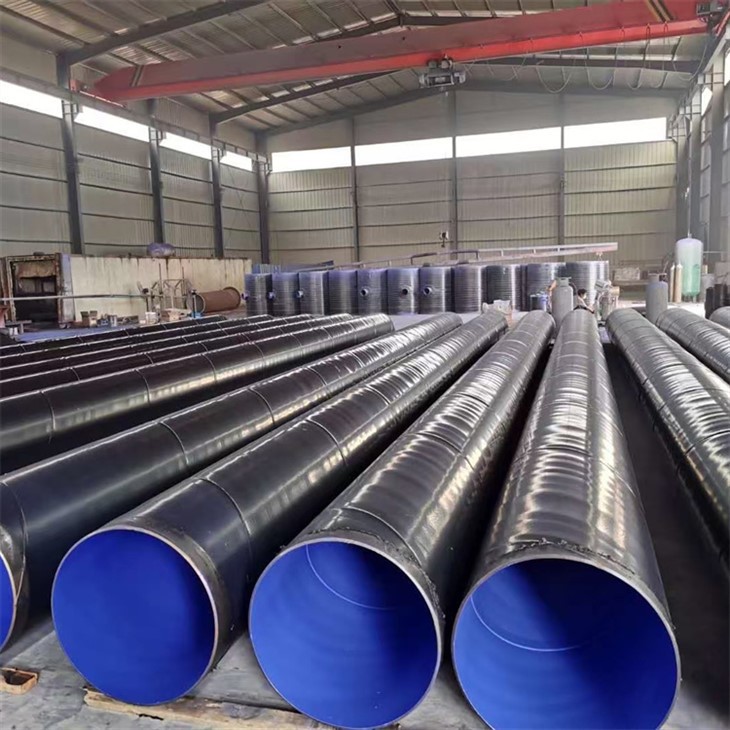

The hardness of epoxy powder coating is typically measured using the pencil hardness test. In this test, pencils with different hardness levels, ranging from 6B (softest) to 9H (hardest), are used to scratch the coating surface. The hardness of the coating is determined by the hardest pencil that doesn't leave a scratch on the surface.
For epoxy powder coatings on anti - corrosion steel pipes, the hardness usually falls in the range of 2H to 4H. This level of hardness provides a good balance between protection and flexibility. A coating that's too hard might become brittle and crack under stress, while a coating that's too soft won't offer sufficient protection against abrasion and wear.
There are several factors that can affect the hardness of the epoxy powder coating. One of the main factors is the formulation of the powder. Different epoxy resins, curing agents, and additives can be used to achieve different hardness levels. For example, using a high - functionality epoxy resin can result in a harder coating.
The curing process also plays a significant role. Proper curing is essential for the coating to reach its full hardness potential. If the curing temperature is too low or the curing time is too short, the coating might not cure completely, leading to a softer coating. On the other hand, over - curing can also cause problems, such as brittleness.
The surface preparation of the steel pipe before coating application is another important factor. A clean, smooth, and properly roughened surface allows the coating to adhere better and develop its full hardness. Any contaminants or irregularities on the surface can weaken the coating and reduce its hardness.
Now, let's compare the epoxy powder anti - corrosion steel pipes with other types of anti - corrosion steel pipes. There are TPEP Anti-corrosion Steel Pipe, Epoxy Resin Anti-corrosion Steel Pipe, and Epoxy Coal Tar Anti-corrosion Steel Pipe.
TPEP anti - corrosion steel pipes have a three - layer structure, which includes an epoxy powder primer, an adhesive layer, and a polyethylene outer layer. The outer polyethylene layer provides good impact resistance, but the overall hardness of the coating system might be different from that of a pure epoxy powder coating.
Epoxy resin anti - corrosion steel pipes use different types of epoxy resins for coating. The hardness of these coatings can vary depending on the resin type and formulation. Some epoxy resin coatings might be softer or harder than the epoxy powder coatings on our pipes.
Epoxy coal tar anti - corrosion steel pipes are known for their excellent resistance to soil corrosion. However, the coal tar component can make the coating a bit softer compared to pure epoxy powder coatings.
When it comes to choosing the right anti - corrosion steel pipe for your project, the hardness of the coating is just one of the factors to consider. You also need to think about the environmental conditions, the expected service life of the pipes, and the budget.
If you're in the market for high - quality epoxy powder anti - corrosion steel pipes, we've got you covered. Our pipes are manufactured with strict quality control measures to ensure that the epoxy powder coating has the right hardness and provides long - lasting protection. We use the latest technology and high - quality raw materials to produce pipes that meet or exceed industry standards.
Whether you're working on a small - scale construction project or a large - scale industrial pipeline, our epoxy powder anti - corrosion steel pipes can be a great choice. We can also customize the coating hardness according to your specific requirements.
If you're interested in learning more about our products or have any questions about the hardness of the epoxy powder coating, feel free to reach out. We're always happy to have a chat and help you find the best solution for your needs.
In conclusion, the hardness of the epoxy powder coating on epoxy powder anti - corrosion steel pipes is an important characteristic that affects the pipe's performance and durability. By understanding the factors that influence hardness and ensuring proper manufacturing processes, we can provide pipes with coatings that offer excellent protection in various applications.
References:
- ASTM D3363 - Standard Test Method for Film Hardness by Pencil Test
- Paint and Coating Technology Handbook


