


Hey there! As a supplier of Epoxy Resin Anti - corrosion Steel Pipes, I often get asked about the anti - fretting corrosion ability of these pipes. So, I thought I'd write this blog to share some insights on this topic.
First off, let's talk about what fretting corrosion is. Fretting corrosion occurs when two surfaces in contact with each other experience small, oscillatory movements. These movements can cause wear and tear at the contact points, and over time, corrosion can set in. This is a big deal in many industries, especially those where steel pipes are used in dynamic environments, like oil and gas, water treatment, and construction.
Now, let's dive into how epoxy resin anti - corrosion steel pipes stack up against fretting corrosion. Epoxy resin is a type of polymer that has some pretty amazing properties. It forms a tough, protective coating on the surface of the steel pipe. This coating acts as a barrier between the steel and the environment, preventing moisture, oxygen, and other corrosive agents from reaching the metal.
One of the key factors that contribute to the anti - fretting corrosion ability of epoxy resin is its adhesion. A well - applied epoxy resin coating adheres tightly to the steel surface. This means that even when the pipe is subjected to small vibrations or movements, the coating doesn't easily peel or flake off. It stays in place and continues to protect the steel.
Another important aspect is the flexibility of the epoxy resin. It has a certain degree of elasticity, which allows it to withstand the mechanical stresses caused by fretting. When the two surfaces move against each other, the epoxy coating can deform slightly without cracking. This is crucial because once a crack forms in the coating, the steel is exposed to the corrosive environment, and corrosion can start.
In addition to its physical properties, epoxy resin also has good chemical resistance. It can resist the attack of many chemicals that are commonly found in industrial environments. For example, in the oil and gas industry, pipes may come into contact with various hydrocarbons, acids, and salts. The epoxy resin coating on the steel pipes can protect them from the corrosive effects of these substances.
Let's compare epoxy resin anti - corrosion steel pipes with some other types of anti - corrosion steel pipes. There's the Epoxy Powder Anti - corrosion Steel Pipe. Epoxy powder coatings are also very effective in preventing corrosion. They are applied electrostatically and then cured to form a hard, durable coating. However, in terms of anti - fretting corrosion, epoxy resin coatings may have an edge because of their better adhesion and flexibility.
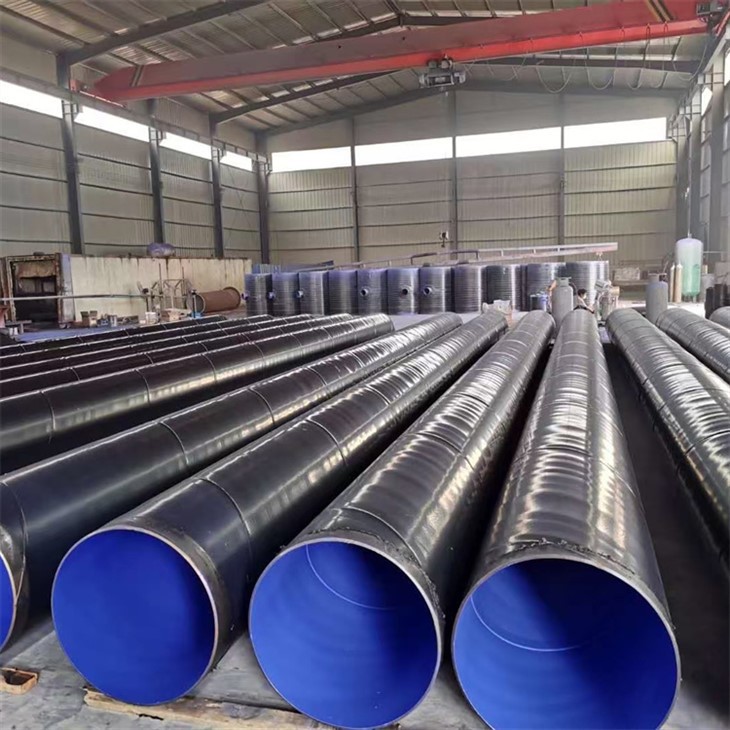

Then there's the 3PE Anti - corrosion Steel Pipe. The 3PE coating consists of three layers: an epoxy powder primer, an adhesive layer, and a polyethylene outer layer. This multi - layer structure provides excellent corrosion protection. But when it comes to fretting, the outer polyethylene layer may be more prone to damage compared to the epoxy resin coating. The polyethylene can be scratched or abraded more easily, exposing the underlying layers and potentially leading to corrosion.
And the TPEP Anti - corrosion Steel Pipe. TPEP stands for “Tape - Extruded Polyethylene”. It's a relatively new type of anti - corrosion coating. While it offers good corrosion protection, its performance in anti - fretting corrosion may vary depending on the specific application and the quality of the installation.
To really understand the anti - fretting corrosion ability of epoxy resin anti - corrosion steel pipes, we can look at some real - world examples. In a water treatment plant, pipes are often subjected to constant water flow, which can cause vibrations. Epoxy resin - coated steel pipes have been found to perform well in such environments. They can resist the fretting corrosion caused by the movement of water and the interaction between the pipes and the surrounding structures.
In the oil and gas industry, pipelines are exposed to high - pressure fluids and are often laid in areas with seismic activity or where there are ground movements. Epoxy resin - coated steel pipes can withstand these conditions and prevent corrosion from occurring due to fretting.
However, it's important to note that the anti - fretting corrosion ability of epoxy resin anti - corrosion steel pipes also depends on the quality of the coating process. If the surface of the steel pipe is not properly prepared before applying the epoxy resin, the adhesion of the coating may be poor. This can lead to premature failure of the coating and reduced anti - fretting corrosion performance.
Also, the thickness of the epoxy resin coating matters. A thicker coating generally provides better protection, but it also needs to be applied evenly. If there are thin spots in the coating, these areas are more likely to be damaged by fretting and corrosion.
So, if you're in an industry where your pipes are likely to experience fretting corrosion, epoxy resin anti - corrosion steel pipes are a great option. They offer reliable protection and can help extend the service life of your pipes.
If you're interested in learning more about our Epoxy Resin Anti - corrosion Steel Pipes or are thinking about a purchase, I'd love to have a chat with you. We can discuss your specific requirements and see how our products can meet your needs. Just reach out, and we can start the conversation about getting the right pipes for your project.
References:
- Some textbooks on corrosion engineering
- Industry reports on anti - corrosion steel pipes


