


As a supplier of Dredge Spiral Steel Pipe, I've witnessed firsthand the challenges these pipes face in high - wind areas. The impact of strong winds on dredge spiral steel pipes can lead to structural instability, accelerated wear and tear, and even pose risks to the overall dredging operation. In this blog, I'll explore the anti - wind measures for dredge spiral steel pipes in high - wind areas.
Understanding the Wind Forces on Dredge Spiral Steel Pipes
Before we delve into the anti - wind measures, it's crucial to understand the wind forces acting on dredge spiral steel pipes. Wind exerts both static and dynamic forces on the pipes. Static forces are the constant pressure exerted by the wind on the surface of the pipe, which can cause the pipe to shift or deform over time. Dynamic forces, on the other hand, are the fluctuating forces caused by gusts of wind. These gusts can create vibrations in the pipe, leading to fatigue and potential failure.
The magnitude of these forces depends on several factors, including the wind speed, the diameter and length of the pipe, and the surface roughness of the pipe. Larger diameter pipes and longer pipes are more susceptible to wind forces as they present a larger surface area for the wind to act upon.
Anti - Wind Design Considerations
Structural Reinforcement
One of the primary anti - wind measures is to reinforce the structure of the dredge spiral steel pipe. This can be achieved through various means. For instance, adding stiffeners along the length of the pipe can increase its resistance to bending and torsional forces caused by the wind. Stiffeners can be in the form of rings or ribs welded to the outer surface of the pipe.
Another approach is to use thicker walled pipes. A thicker wall provides greater strength and stiffness, making the pipe more resistant to wind - induced deformation. When selecting the pipe, it's important to consider the specific wind conditions in the area. For extremely high - wind areas, Large Diameter Spiral Welded Steel Pipe with a thicker wall may be the ideal choice. These pipes are designed to withstand heavy loads and strong external forces, including wind forces.
Aerodynamic Design
An aerodynamic design can significantly reduce the wind forces acting on the dredge spiral steel pipe. By shaping the pipe in a way that minimizes the wind resistance, we can decrease the static and dynamic forces exerted by the wind. For example, using a streamlined cross - section instead of a circular cross - section can reduce the drag coefficient. A lower drag coefficient means less wind pressure on the pipe.
Some manufacturers are also exploring the use of surface treatments to improve the aerodynamics of the pipe. A smooth surface can reduce the turbulence around the pipe, thereby reducing the wind forces. However, it's important to balance the aerodynamic benefits with other factors such as corrosion resistance and abrasion resistance.
Installation and Anchoring
Proper Installation
The way the dredge spiral steel pipe is installed plays a crucial role in its ability to withstand wind forces. During installation, the pipe should be aligned correctly to minimize the exposure to the wind. For example, if the prevailing wind direction is known, the pipe can be installed perpendicular to the wind direction to reduce the surface area exposed to the wind.

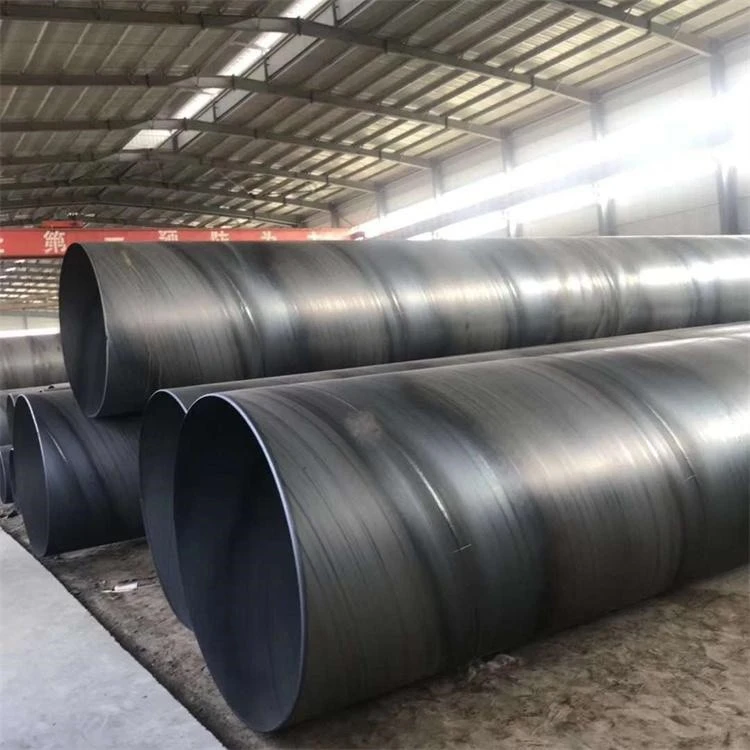
It's also important to ensure that the pipe is installed at the correct depth. A deeper installation can provide more stability as the surrounding soil or sediment can act as a natural anchor. However, the installation depth should be carefully determined based on the soil conditions and the design requirements of the dredging project.
Anchoring Systems
An effective anchoring system is essential for securing the dredge spiral steel pipe in high - wind areas. Anchors can be used to prevent the pipe from shifting or floating due to the wind forces. There are several types of anchors available, including gravity anchors, driven piles, and suction anchors.
Gravity anchors rely on their weight to hold the pipe in place. They are relatively simple and cost - effective but may not be suitable for all soil conditions. Driven piles are inserted into the ground to provide a stable foundation for the pipe. They can be made of steel, concrete, or other materials. Suction anchors use suction to create a strong hold on the seabed or ground. These anchors are particularly useful in soft soil conditions.
Monitoring and Maintenance
Structural Monitoring
Regular monitoring of the dredge spiral steel pipe is necessary to detect any signs of damage or deformation caused by the wind. Structural monitoring can be done using various techniques, including strain gauges, accelerometers, and optical sensors. Strain gauges can measure the stress and strain in the pipe, while accelerometers can detect vibrations caused by the wind.
By continuously monitoring the structural integrity of the pipe, we can identify potential problems early and take corrective actions. For example, if the strain measurements indicate that the pipe is under excessive stress, additional reinforcement or adjustment of the anchoring system may be required.
Maintenance
Proper maintenance is also crucial for ensuring the long - term performance of the dredge spiral steel pipe in high - wind areas. This includes regular inspections of the pipe for signs of corrosion, abrasion, and fatigue. Corrosion can weaken the pipe over time, making it more susceptible to wind - induced failure. Therefore, it's important to apply appropriate coatings to protect the pipe from corrosion.
In addition, any damage to the pipe, such as cracks or dents, should be repaired promptly. Q235B National Standard Spiral Steel Pipe is known for its good weldability and toughness, which makes it easier to repair if damaged.
Material Selection
The choice of material for the dredge spiral steel pipe can also affect its ability to withstand wind forces. Double - sided Submerged Arc Welding Spiral Steel Pipe is a popular choice for dredging applications. These pipes are welded using the double - sided submerged arc welding process, which provides a high - quality weld with excellent strength and toughness.
The steel grade of the pipe is also an important consideration. Higher strength steel grades can offer better resistance to wind - induced deformation. However, the selection of the steel grade should be based on a comprehensive evaluation of the project requirements, including the wind conditions, the dredging environment, and the cost.
Conclusion
In high - wind areas, dredge spiral steel pipes face significant challenges due to the strong wind forces. By implementing a combination of anti - wind measures, including structural reinforcement, aerodynamic design, proper installation and anchoring, monitoring, and maintenance, we can ensure the safety and reliability of these pipes.
As a supplier of dredge spiral steel pipes, I'm committed to providing high - quality products and technical support to our customers. If you're involved in a dredging project in a high - wind area and need reliable dredge spiral steel pipes, please feel free to contact us for more information and to discuss your specific requirements. We'll be happy to assist you in selecting the right pipes and implementing the appropriate anti - wind measures for your project.
References
- "Wind Engineering for Structural Design" by Alan G. Davenport
- "Dredging Technology" by Peter Van den Berg
- "Steel Pipe Design and Installation" by the American Petroleum Institute


