


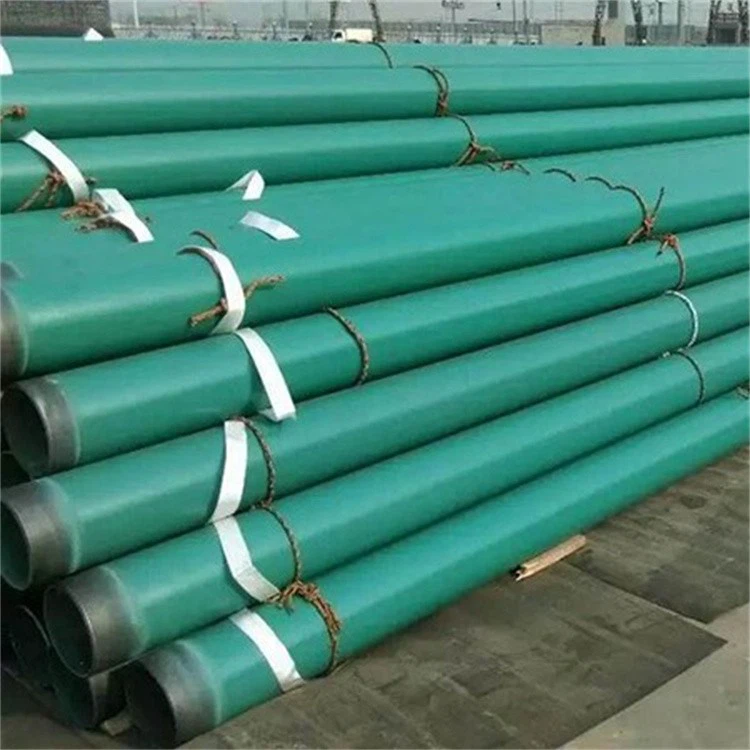
Hey there! I'm a supplier of Epoxy Resin Anti - corrosion Steel Pipe, and today I wanna chat about how we can improve the impact resistance of the epoxy resin coating on steel pipes.
Epoxy resin coatings are super popular for steel pipes. They offer great corrosion protection, but sometimes, they can be a bit weak when it comes to impact. Whether it's during transportation, installation, or in service, steel pipes with epoxy resin coatings might face impacts that could damage the coating. Once the coating is damaged, the steel pipe becomes vulnerable to corrosion, which shortens its lifespan. So, improving the impact resistance of the epoxy resin coating is crucial.
1. Selecting the Right Epoxy Resin
The first step is picking the right epoxy resin. Not all epoxy resins are created equal. Some are more flexible and tough, which are the qualities we need for better impact resistance.
There are different types of epoxy resins out there. For example, bisphenol - A epoxy resins are widely used because they're relatively cheap and have good chemical resistance. But they can be a bit brittle. On the other hand, bisphenol - F epoxy resins are more flexible and have better impact resistance. They're a great choice if you want to improve the coating's ability to withstand impacts.
When we're choosing an epoxy resin, we also need to consider its molecular weight. Resins with a higher molecular weight usually have better mechanical properties, including impact resistance. But they might be more difficult to process. So, it's all about finding that sweet spot between performance and processability.
2. Adding Fillers and Reinforcements
Another way to boost the impact resistance is by adding fillers and reinforcements to the epoxy resin coating.
Fillers
Fillers like silica, mica, and calcium carbonate can be added to the epoxy resin. Silica, for instance, can improve the hardness and abrasion resistance of the coating. When the coating is harder, it can better resist impacts. Mica can enhance the barrier properties of the coating, which not only helps with corrosion protection but also makes the coating more resistant to impacts. Calcium carbonate is a cheap and widely available filler that can improve the mechanical properties of the coating to some extent.
Reinforcements
Fibers are great reinforcements. Glass fibers are commonly used because they're strong and relatively inexpensive. When glass fibers are added to the epoxy resin coating, they act like a skeleton, providing additional strength and toughness. Carbon fibers are even stronger, but they're more expensive. They can significantly improve the impact resistance of the coating, especially in high - performance applications.
3. Optimizing the Coating Process
The coating process also plays a big role in determining the impact resistance of the epoxy resin coating.
Surface Preparation
Before applying the epoxy resin coating, the surface of the steel pipe needs to be properly prepared. If there's rust, oil, or dirt on the surface, the coating won't adhere well, and its impact resistance will be poor. We usually use methods like sandblasting to clean the surface and create a rough texture. This rough surface allows the coating to bond better with the steel pipe, making it more resistant to impacts.
Coating Thickness
The thickness of the coating is important. If the coating is too thin, it won't be able to provide enough protection against impacts. On the other hand, if it's too thick, it might crack under stress. We need to find the optimal coating thickness based on the application requirements. Generally, a coating thickness of around 300 - 500 microns is good for most applications.
Curing Conditions
The curing process is crucial. If the epoxy resin coating doesn't cure properly, its mechanical properties, including impact resistance, will be affected. We need to control the temperature and time during the curing process. For example, some epoxy resins need to be cured at a high temperature for a certain period of time to achieve the best performance.
4. Post - Treatment
After the coating is applied and cured, we can also do some post - treatments to improve its impact resistance.
Heat Treatment
Heat treatment can improve the cross - linking density of the epoxy resin coating. When the cross - linking density is higher, the coating becomes stronger and more resistant to impacts. We can heat the coated steel pipe to a certain temperature for a short period of time to achieve this.
Surface Modification
We can also modify the surface of the coating. For example, we can apply a thin layer of a tough polymer on top of the epoxy resin coating. This polymer layer can act as a buffer, absorbing the energy from impacts and protecting the underlying epoxy resin coating.
Our Product Range
As a supplier, we offer a variety of anti - corrosion steel pipes. Check out our FBE Anti - corrosion Steel Pipe, Epoxy Powder Anti - corrosion Steel Pipe, and IPN8710 Anti - corrosion Steel Pipe. All of these pipes are coated with high - quality epoxy resin coatings, and we've taken all the steps mentioned above to ensure they have good impact resistance.
If you're in the market for anti - corrosion steel pipes with excellent impact - resistant epoxy resin coatings, we'd love to have a chat with you. Whether you're working on a small project or a large - scale infrastructure development, we can provide you with the right products. Just reach out to us, and we'll be happy to discuss your requirements and offer the best solutions.

References
- "Epoxy Resins: Chemistry and Technology" by Clayton A. May
- "Handbook of Epoxy Resins" by Henry Lee and Kris Neville
- Research papers on epoxy resin coatings for steel pipes from academic journals such as "Corrosion Science" and "Journal of Coatings Technology and Research"


