


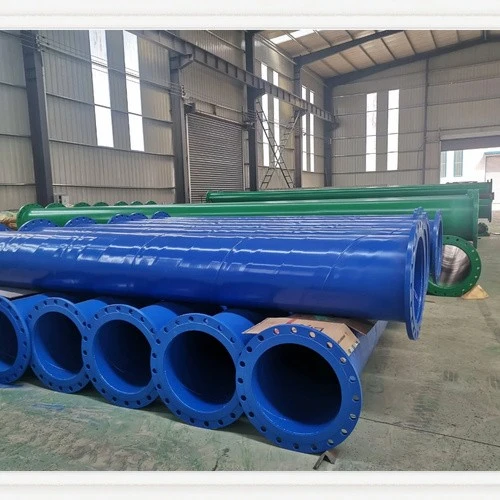
As a supplier of Plastic Coated Steel Pipe for Mining, I've witnessed firsthand the crucial role these pipes play in the mining industry. Evaluating their performance comprehensively is not just a technical necessity but also a key factor in ensuring the efficiency and safety of mining operations. In this blog, I'll share some insights on how to conduct a thorough evaluation of these pipes.
1. Material Quality
The foundation of a high - performance plastic coated steel pipe lies in its material quality. The steel substrate forms the structural backbone of the pipe. High - grade steel with appropriate chemical composition and mechanical properties is essential. For example, the carbon content should be within a specific range to ensure sufficient strength and ductility. A steel pipe with low carbon content may lack the necessary strength, while excessive carbon can make it brittle.
The plastic coating also significantly impacts performance. The plastic material should have excellent corrosion resistance, abrasion resistance, and chemical stability. Polyethylene (PE) and polyvinyl chloride (PVC) are commonly used for coating mining pipes. PE coatings are known for their high - density and good impact resistance, which is crucial in the harsh mining environment where pipes may be subject to physical impacts. PVC coatings, on the other hand, offer good chemical resistance, protecting the pipe from corrosive substances commonly found in mining wastewater.
When evaluating material quality, it's important to check the manufacturer's specifications and certifications. Reputable suppliers, like us, provide detailed information about the steel grade and plastic type used in the pipes. Third - party testing reports can also be a reliable source of information. For instance, tests for the chemical composition of the steel and the physical properties of the plastic coating can confirm the quality of the materials.
2. Coating Adhesion
One of the most critical aspects of plastic coated steel pipes is the adhesion between the plastic coating and the steel substrate. Poor adhesion can lead to coating delamination, exposing the steel to corrosion and reducing the pipe's service life.
There are several methods to evaluate coating adhesion. One common approach is the cross - hatch test. In this test, a series of parallel cuts are made through the coating to the steel substrate, followed by another set of cuts perpendicular to the first set, creating a grid pattern. A piece of adhesive tape is then applied over the grid and quickly pulled off. The amount of coating removed by the tape indicates the adhesion strength. A high - quality plastic coated steel pipe should have minimal or no coating removal during this test.
Another method is the pull - off test, which measures the force required to pull a small circular area of the coating away from the steel substrate. This test provides a quantitative measure of adhesion strength. For mining pipes, a strong adhesion is necessary because they are often subjected to vibrations, pressure changes, and temperature variations, all of which can stress the coating - substrate interface.
3. Corrosion Resistance
Mining environments are extremely corrosive due to the presence of acidic or alkaline substances, salts, and moisture. Corrosion can weaken the pipe structure, leading to leaks and failures. Therefore, evaluating the corrosion resistance of plastic coated steel pipes is of utmost importance.
Salt spray tests are a widely used method to assess corrosion resistance. In this test, the pipe samples are exposed to a salt - laden mist in a controlled chamber for a specified period. After the test, the samples are examined for signs of corrosion, such as rust spots or blistering on the coating. A well - coated pipe should show minimal signs of corrosion after an extended salt spray test.
Electrochemical impedance spectroscopy (EIS) is another advanced technique for evaluating corrosion resistance. It measures the electrical resistance of the coating and the steel - coating interface. A high impedance value indicates good corrosion protection. By regularly monitoring the impedance of the pipes in a mining system, operators can detect early signs of coating degradation and take preventive measures.
4. Pressure Resistance
Mining operations often involve high - pressure fluid or gas transportation. Therefore, plastic coated steel pipes must be able to withstand the required pressure without failure.
Hydrostatic pressure testing is the standard method for evaluating pressure resistance. In this test, the pipe is filled with water and pressurized to a specified level for a certain period. The pipe is then inspected for any signs of leakage, deformation, or rupture. The test pressure is usually higher than the normal operating pressure to ensure a safety margin.
Finite element analysis (FEA) can also be used to predict the pressure - bearing capacity of the pipes. This computer - based simulation technique models the stress distribution in the pipe under different pressure conditions. By analyzing the FEA results, engineers can optimize the pipe design and ensure its reliability under high - pressure situations.
5. Abrasion Resistance
Mining materials, such as ores and slurries, can cause significant abrasion to the inner surface of the pipes. Good abrasion resistance is essential to maintain the integrity of the pipes over time.
Abrasion testing can be conducted using a variety of methods. One common test is the Taber abraser test, where a rotating abrasive wheel is applied to the pipe surface under a specified load. The weight loss of the pipe after a certain number of rotations is measured to evaluate its abrasion resistance.
Another approach is the slurry erosion test, which simulates the actual mining environment. A slurry of abrasive particles and water is pumped through the pipe at a high velocity. The amount of material removed from the pipe inner surface after a set period is used to assess its abrasion resistance.
6. Long - term Performance
Evaluating the long - term performance of plastic coated steel pipes is crucial for predicting their service life in the mining environment. This involves considering factors such as aging, environmental exposure, and cyclic loading.
Accelerated aging tests can be used to simulate long - term environmental exposure in a relatively short period. For example, pipes can be exposed to high temperatures, UV radiation, and humidity to accelerate the aging process. By analyzing the changes in the pipe's properties, such as coating hardness, adhesion, and corrosion resistance, after the accelerated aging test, an estimate of its long - term performance can be made.

Cyclic loading tests are also important, as pipes in mining operations may be subjected to repeated pressure changes and vibrations. These tests involve applying cyclic loads to the pipes and monitoring their performance over time. Fatigue failure is a common issue in pipes under cyclic loading, and these tests can help identify potential weaknesses in the pipe design and material.
Conclusion
Comprehensively evaluating the performance of plastic coated steel pipes for mining is a multi - faceted process that involves assessing material quality, coating adhesion, corrosion resistance, pressure resistance, abrasion resistance, and long - term performance. By conducting these evaluations, mining operators can select the most suitable pipes for their operations, ensuring safety, efficiency, and cost - effectiveness.
As a supplier of Plastic Coated Steel Pipe for Mining, we are committed to providing high - quality pipes that meet the strictest performance standards. Our pipes are also applicable in other fields, such as Plastic Coated Steel Pipe for Fire Protection and Plastic Lined Steel Pipe. If you are interested in our products or have any questions about pipe performance evaluation, please feel free to contact us for further discussion and procurement negotiation.
References
- ASTM International. Standard test methods for evaluating the performance of plastic - coated steel pipes.
- ISO standards related to steel pipes and plastic coatings.
- Industry research reports on the use of plastic coated steel pipes in mining.


