As an important industrial piping material, spiral steel pipe, with its unique structural design and excellent performance, has been widely used in the petroleum, chemical, natural gas, and construction industries. Its core structural features and mechanical advantages make it an ideal choice for long-distance pipelines and load-bearing structures.
1. Basic Structural Components of Spiral Steel Pipe
Spiral steel pipe is a welded steel pipe made from strip steel or coiled plate through a spiral forming process. Its basic structure consists of three components: the pipe body, the weld seam, and the internal and external surface treatment layers.
Pipe Body Structure: The main body of spiral steel pipe is formed by continuously welding the steel strip at a specific helical angle (usually 50° to 70°). This forming method ensures uniform wall thickness and stable geometric dimensions, enabling the pipe to withstand high internal pressures.
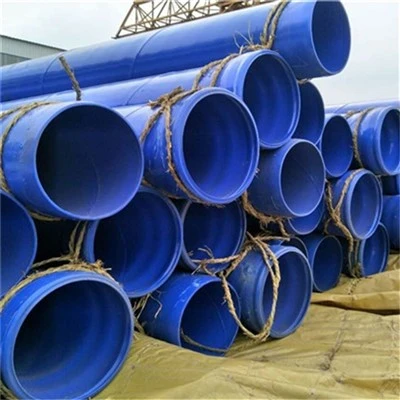
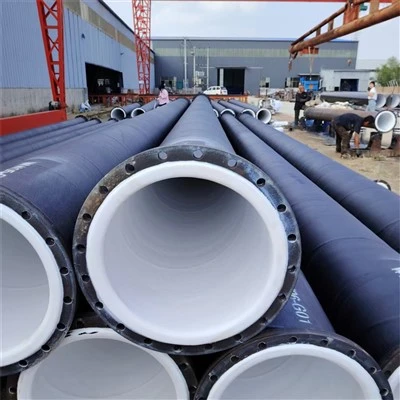
Weld Seam Structure: The weld seam of spiral steel pipe is distributed in a continuous spiral pattern, resulting in a longer weld seam than that of straight seam steel pipe. However, the welding process utilizes efficient processes such as submerged arc welding (SAW) or high-frequency welding (HFW), ensuring high weld strength and density. Surface Treatment: Depending on the operating environment, the surface of spiral steel pipe may undergo an anti-corrosion treatment, such as epoxy powder coating, 3PE anti-corrosion layer, or galvanizing, to enhance its corrosion resistance and service life.
2. Mechanical Advantages of Spiral Steel Pipe
The structural design of spiral steel pipe imparts unique mechanical properties, making it outstanding in high-pressure, large-diameter pipeline applications.
High Strength and Stability: Due to the spiral forming process, the steel pipe has uniform stress distribution in both the circumferential and axial directions, capable of withstanding high internal pressures and external loads. Its hoop stress bearing capacity surpasses that of straight seam steel pipe, making it suitable for high-pressure oil and gas transportation.
Large Diameter Adaptability: The production process of spiral steel pipe allows for the manufacture of large-diameter pipes with diameters of up to several meters (e.g., DN3000 and above), whereas straight seam steel pipe is limited in this regard. This makes spiral steel pipe an ideal material for large-scale projects such as water conservancy projects and submarine pipelines. Welding Reliability: Modern spiral steel pipe welding techniques (such as double-sided submerged arc welding) ensure high weld quality. Combined with non-destructive testing (such as X-ray or ultrasonic testing), this further enhances pipeline safety.
3. Applications of Spiral Steel Pipe
The structural characteristics of spiral steel pipe enable it to play a key role in a variety of industries:
Oil and Gas Transportation: Used in long-distance oil and gas pipelines, its high pressure-bearing capacity and corrosion resistance make it suitable for transporting crude oil, natural gas, and refined products.
Water Conservancy and Municipal Engineering: As water supply and drainage pipes, its large diameter is suitable for urban water supply and drainage systems and large-scale water diversion projects.
Building Structures: Spiral steel pipe can serve as a load-bearing component in the pile foundations and supporting structures of bridges and high-rise buildings, providing stable mechanical support.
Marine Engineering: Spiral steel pipe with special anti-corrosion treatment can be used in submarine pipelines and offshore platforms to resist seawater corrosion and high-pressure environments.
4. Future Development Trends
With advances in materials science and manufacturing technology, spiral steel pipe is developing towards higher strength, lighter weight, and greater corrosion resistance. For example, the use of high-strength steel (such as API 5L X80 and X100) and new coating technologies (such as nano-composite anti-corrosion coatings) can further enhance its performance. Furthermore, the application of automated welding and intelligent inspection technologies will improve production efficiency and quality control.
Conclusion
Spiral steel pipe, with its unique helical structure, excellent mechanical properties, and wide application adaptability, has become an indispensable material in modern industry and infrastructure construction. In the future, with continuous technological innovation, spiral steel pipe will demonstrate its value in even more areas, providing more reliable solutions for global energy transportation and engineering construction.