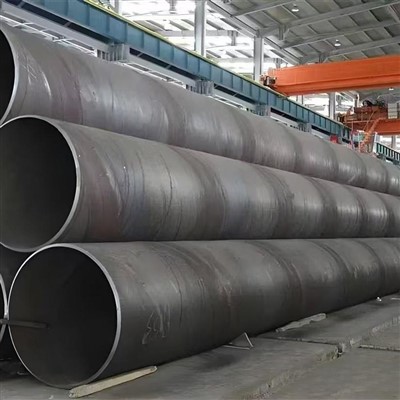
Due to its high strength, pressure resistance, and excellent welding properties, spiral steel pipe is widely used in the oil, gas, water conservancy, and construction industries. However, to fully utilize its performance advantages, proper usage techniques are crucial. The following introduces key spiral steel pipe usage tips from the aspects of installation, maintenance, welding, and corrosion protection.
1. Installation Tips: Ensuring Stability and Alignment
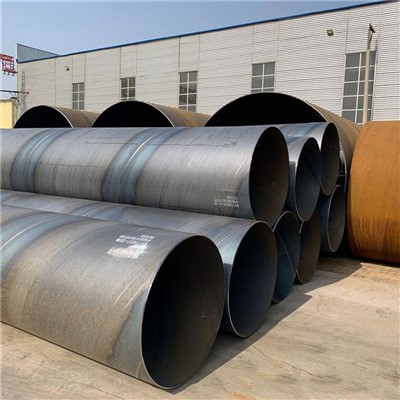
When installing spiral steel pipe, first ensure that the pipe specifications match the project design and inspect the pipe body for damage caused by transportation or storage. Before installation, clean the pipe ends to remove burrs and welding slag to prevent compromised joint sealing. When butt-jointing, ensure the pipe axes are aligned to avoid forced splicing that causes stress concentration. For large-diameter spiral steel pipe, it is recommended to use a butt-joint tool to assist in installation, ensuring that the ends are parallel and reducing welding difficulties. Additionally, support points should be appropriately located to prevent excessive bending or deformation due to the pipe's own weight or external forces.
2. Welding Process: Controlling Quality and Strength
Spiral steel pipe connections are often welded, and weld quality directly impacts pipe durability. Before welding, the pipe ends must be beveled to ensure uniform penetration. Appropriate welding materials (such as low-hydrogen electrodes) and process parameters (such as current and voltage) must be selected, and interpass temperatures must be strictly controlled to prevent thermal cracking. When welding multiple layers, remove slag layer by layer to avoid slag inclusions and porosity. After welding, non-destructive testing (such as X-ray or ultrasonic testing) is required to ensure the welds are free of defects.
3. Anti-corrosion Measures: Extending Service Life
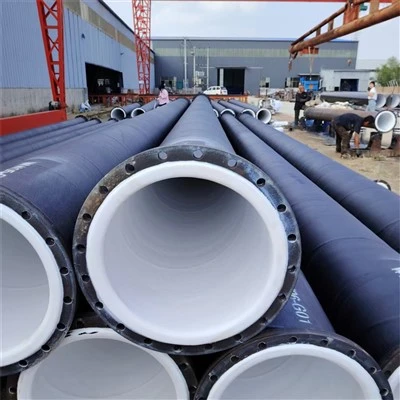
Spiral steel pipes are susceptible to rusting when exposed to humid and corrosive environments for a long time, making anti-corrosion treatment essential. Common anti-corrosion methods include epoxy coal tar coating, 3PE anti-corrosion coating, or galvanizing. Before installation, the pipe body should be surface treated (such as sandblasting) to ensure coating adhesion. Buried pipelines require cathodic protection to prevent electrochemical corrosion. Furthermore, regular inspection of the anti-corrosion coating for damage and prompt repair can significantly extend the service life of the steel pipe.
4. Routine Maintenance: Preventing Potential Problems
During operation, the pipe support structure should be regularly inspected for stability to prevent deformation due to settling or external forces. For pipelines transporting corrosive media, internal wall corrosion must be monitored and, if necessary, the pipe wall must be replaced or thickened. In winter, in low temperatures, insulation measures are necessary to prevent the steel pipe from cracking due to shrinkage.
Mastering these spiral steel pipe usage techniques will not only improve project safety but also effectively reduce maintenance costs, ensuring the long-term stable operation of the pipeline system.